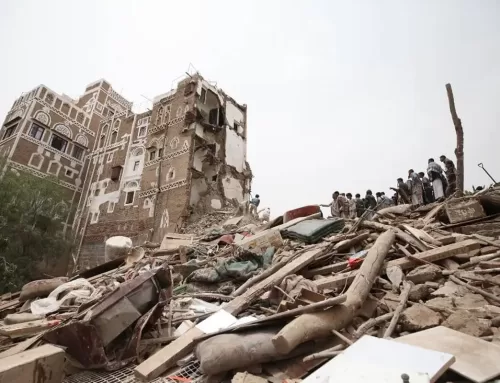
Conflicts of warring parties and the management of transition phase authorities have left dozens ofcasualties, it is shameful that the parties and the authorities disavow their responsibility towards all those casualties.

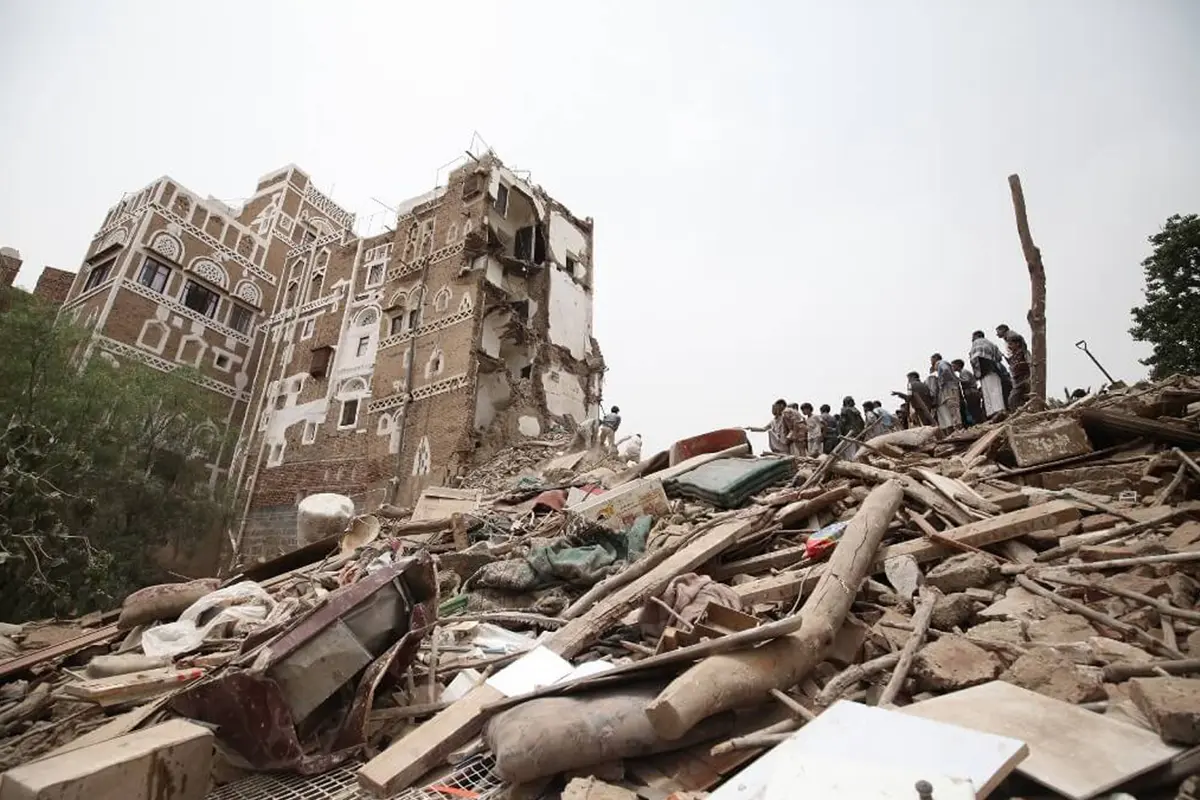
Photo, courtesy of Yemen news agency, SABA
Tuesday (23 Sep 2014) – Sana’a)
Mwatana Organization for Human Rights maintained that the Peace and Partnership Agreement,which was signed by a number of political parties as well as President Abed Rabbo Mansour Hadi under UN’s auspices on Sunday noon, September 21st, 2014, has overlooked civilian casualties in the recent fighting just as it overlooked victims of human rights violations at this and previous phases. MOHR indicated that there were civilian casualties, including women andchildren, who were killed in recent clashes in the north of Sana’a between Al-Houthi militantsand government forces, and that cases investigated by MOHR – which will be included and published in a report later – reveal that there have been dead and wounded civilians and medicsas well as damage sustained by houses and hospitals; yet the warring parties did not take anyprecautions to minimize damage to civilian population and properties. Rather, in some cases, the combatants attacked civilian targets directly and perhaps deliberately, in violation ofInternational Humanitarian Law regarding the rules of war.
Mwatana condemned the continued neglect by the current management (represented by thetransitional period authority, the political parties and UN) to the file of human rights and unseen victims of violations at this stage. Abdul Rashid Al-Faqih, MOHR Executive Director, stated that: “The conflict parties and the management of the transitional period have leftdozens of dead and wounded victims, detainees and damage sustained by civilian houses and facilities, including hospitals, as well as other forms of violations, and it is shameful on the part of parties and official authorities to disown their responsibility towards all those, especially as most of them are still suffering”. Al-Faqih confirmed that “any agreement thatputs an end to the fighting is important, but any agreement that does not include victims of violations as one of its priorities is an incomplete and distorted agreement”.
Mwatana renewed its demand for the formation of an investigation commission to look into the violations that occurred during the recent clashes in Sana’a and other regions, as well asthe attack on the demonstrators in front of the Cabinet’s Headquarters and Al-Jeraf. MOHR also asserted that the investigations should be transparent and serious, and with the participation of UN to ensure the administration of justice and fair trials of those responsible.
Moreover, Abdul Rashid Al-Faqih states that “The new Yemen cannot be founded on a policy of impunity, ignorance of human rights violations, and absence of the human rights file in the various stages. Such negative aspects imply that the current behavior of the authorities and warring parties shows no signs that they are determined to put an end to human rights violations”. He added that “these authorities and parties should provide evidence in terms oftaking practical steps to show that they have the will and determination to respect human rightsand do what they can to protect these rights”.
Mwatana demanded the annexation of an appendix to the Peace and Partnership Agreementto address human rights issues and include practical steps that ensure investigation, fairness and accountability.
Sometime earlier, Ansar Allah (Al-Houthi) Group called for an open-ended sit-in in Al-Jeraf Area, in a street leading to the airport and close to three ministries (Ministry of Communications, Ministry of Electricity, and Ministry of Interior) as well as in some other areas, with effect from Friday, August 22, 2014 until the implementation of their three demands: overthrow the government, drop the late price hike (the dose, or “liberation of prices of oil derivatives,” i.e. lifting government aid in support of prices of oil derivatives), and implement the outputs of the National Dialogue Conference. The group escalated its protests at several stages in conjunctionwith gradual intensification of infiltration of its armed militants into the vicinity of the capital Sana’a.
Then, armed clashes erupted between government forces versus Al-Houthi militants between 18to 21 September, and ended up with the fall of the capital Sana’a under the control of Al-Houthimilitants, and the signing of the Peace and Partnership Agreement between Ansar Allah (Al-Houthis), President Hadi and the political parties, under the auspices of the United Nations.
According to the Ministry of Public Health and Population, 200 dead bodies and 461 wounded casualties were recovered so far by the Ministry’s emergency teams from neighborhoods which witnessed tragic armed clashes in the capital Sana’a since September 16. The Director General of Emergency and SOS at the Ministry of Public Health and Population, Dr. AliSariyah told the Yemeni official news agency SABA: “Today, the Ministry’s SOS teams haverecovered 53 bodies of victims of the clashes from Al-Nahdhah (Renaissance) Neighborhood, Area Six Headquarters, As-Salaam Neighborhood, and Al-Iman University. All bodies were moved to mortuaries in government civilian and military hospitals”.